
QuantPi joins NVIDIA Halos AI Systems Inspection Lab
Read announcement

Production-Ready
Agentic AI Systems

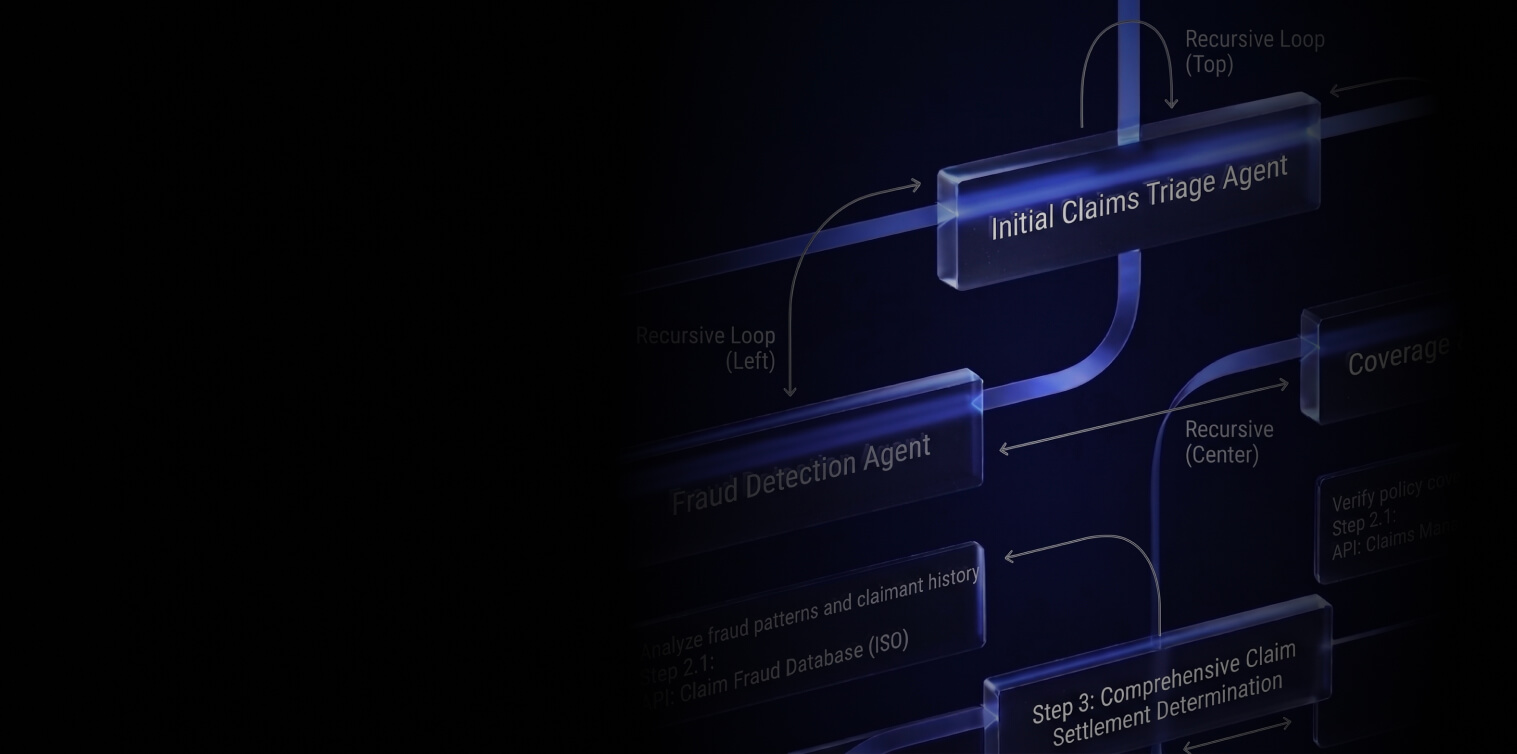
QuantPi provides trajectory-level validation of autonomous agentic AI systems built for non-linear, multi-step execution workflows. These systems combine language-model reasoning with tool invocation and multi-step orchestration to autonomously execute workflows toward a defined goal. Where multi-agent execution pathways drive automated business logic with direct operational consequences, compounding step-level errors and trajectory decay must be intercepted before production.
Typical Failure Modes

What aggregate single-turn metrics conceal

Unnecessary & Infinite Loops
The agent enters unhandled retry cycles or cascading recovery loops, exponentially spiking compute costs without quality improvements.
Tool Hallucination & Handoff Mismatch
The system invokes external APIs, interface handoffs, or database tools using malformed schemas or distorted semantic arguments.
Plan & Goal Adherence Drift
Cumulative context degradation across complex trajectories where the agent progressively drops systemic execution guardrails or core policy logic.
testing approach

How QuantPi validates agentic systems

Domain information

Every validation sequence begins with an explicit operational design domain (ODD) boundary configuration: target execution environments, available tool tokens, downstream action interfaces, multi-turn interaction depth limits, and exit policy parameters.

Dimensional Decomposition

End-to-end interactions undergo trace-based validation at both the holistic system and sub-system level. The platform maps agent behavior across six safety and performance dimensions derived directly from orchestrator logs:

Tool selection and reasoning correctness
Plan and constraint adherence
Multi-turn state persistence and variable carry-over
Step and path efficiency metrics
Trajectory reproducibility and state integrity
Multi-level error decomposition and recovery loop stability

To eliminate evaluation bias, testing leverages AI-driven user simulation models to stress-test execution boundaries. All performance scores are strictly reported as a Metric + Confidence Interval pair to statistically quantify uncertainty stemming from data constraints or stochastic model environments.

Acceptance Criteria

Acceptance criteria are predefined, measurable performance thresholds the system must meet on each tested dimension to qualify for deployment. For agentic systems, they are defined as trajectory validity and goal completion success rates under adversarial variations, enforcing strict out-of-the-box test scenarios to ensure absolute policy logic alignment.

Deployment Decision

Systems proving robust across diverse execution trajectories are cleared for operational integration; partial failures automatically isolate the exact loop phase or tool schema mismatch requiring optimization.

Driving Real-World Impact with Trusted AI

Real-world examples of how companies use QuantPi to build trustworthy AI — from identifying weaknesses to achieving reliable, production-grade performance

QuantPi’s agentic evaluation framework produces:

A trace-based trajectory diagnostic map explicitly identifying step-level failure root causes across orchestration layers.

An execution efficiency profile measuring token consumption overhead, latency bounds, and step-budget parameters.

An audit-grade, traceable evidence package tracking multi-turn state consistency and API integration integrity to satisfy external compliance requirements.

Applied across automated claims resolution, autonomous workflow routers, and multi-tool enterprise agents.

See QuantPi's multi-agent orchestration and trajectory validation framework deployed for automated claims processing at a European provider of AI-driven claims-processing infrastructure.

Thank you! Your submission has been received!
Oops! Something went wrong while submitting the form.